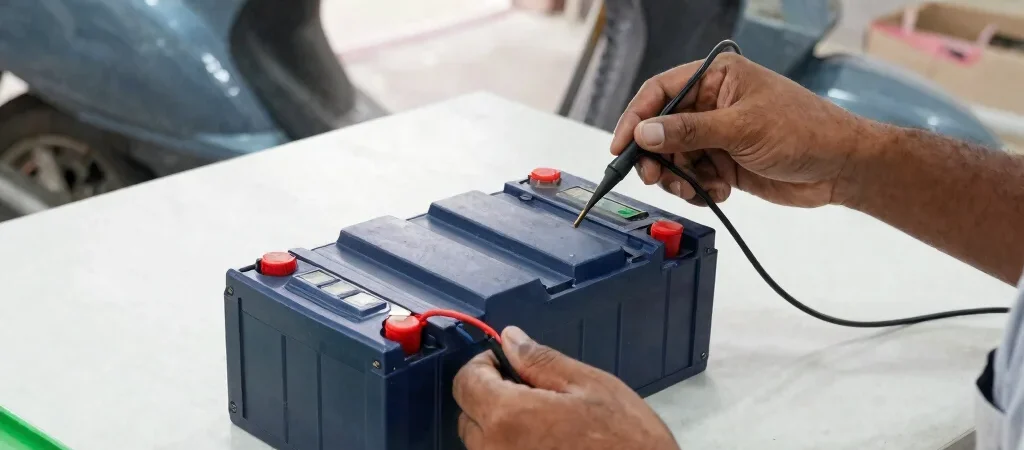
An easy-bike that feels weaker on the same familiar route is telling you something, but not necessarily that the whole battery pack is finished. Charging habits, a loose connection, worn cells, or a problem in the battery management system can produce symptoms that look alike. Start by noting what changed and when.
Notice the Pattern First
Does the vehicle lose power from the start, or only after several trips? Does the battery indicator drop suddenly, or does charging stop earlier than usual? Those observations, along with the battery type and approximate age, give a repair technician a better starting point than “it isn’t holding charge.”
Check the Pack, Not Just the Gauge
A dashboard reading is useful, but it cannot explain what is happening inside the pack. For a lithium-ion LFP battery, a technician may check cell balance and the BMS, the system that monitors and protects the battery. For a lead-acid battery, testing the pack and its connections can help distinguish a weak battery from a connection or charging issue.
Ask for Findings Before Deciding
Ask what was tested, which parts appear repairable, and what the estimate covers in BDT. A suitable repair might involve balancing cells, replacing a damaged cell, or repairing the BMS; sometimes the condition of the pack makes replacement the more sensible option. At TechFeed Labs in 2 No Gate, Sholoshohor, share what the battery powers and what changed so the team can begin with the right questions.